By TPR Staff
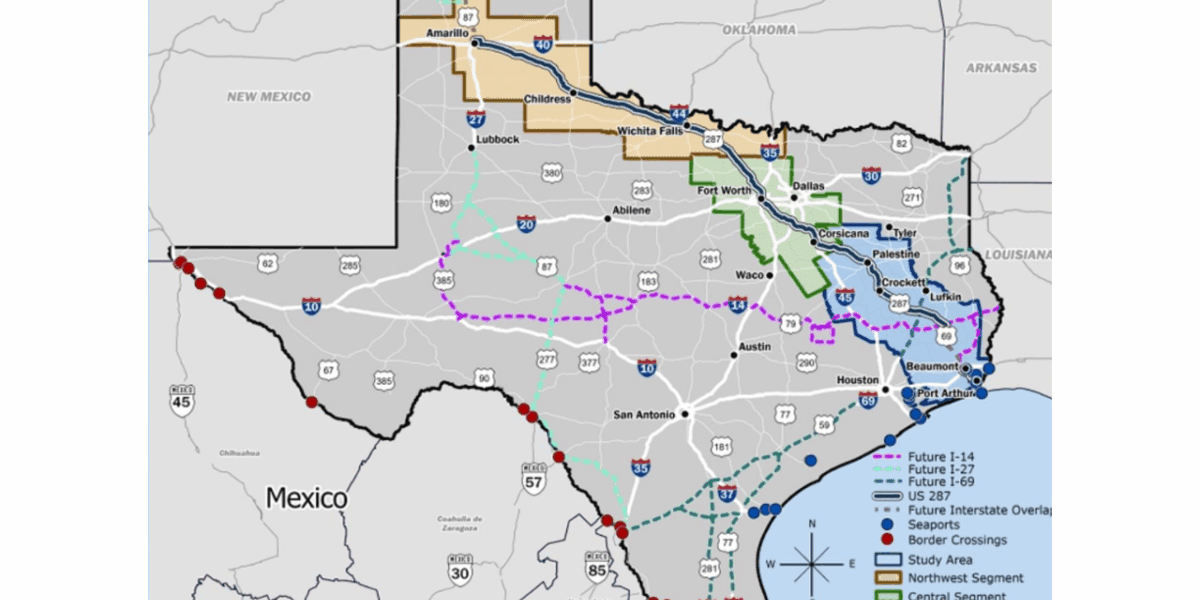
Texas is once again in the middle of a major transportation conversation, and this time the discussion centers on whether the state could see two entirely new interstate corridors built over the next several decades. While Texans are familiar with continuous population growth and the resulting strain on transportation networks, the scale of the projects under consideration is unusually large. Between the federally authorized I-14 System and the Texas Department of Transportation’s (TxDOT) new study on converting US 287 into an interstate, Texas could be looking at some of the most significant highway developments since the original Interstate Highway System.
These proposals come at a time when Texans are increasingly aware of the rising cost of infrastructure, the limits of government funding, and the long-term financial obligations tied to mega-projects that unfold over decades. The promise of new interstates often sounds appealing, but the reality involves federal designation hurdles, environmental reviews, land acquisition, and enormous construction costs that taxpayers ultimately bear. Understanding these projects requires comparing the benefits they offer with the concerns raised by both residents and fiscal watchdogs.
What follows is a comprehensive look at the I-14 System’s progress and the future of US 287 as a potential interstate, drawing from TxDOT’s official planning documents, public engagement summaries, and statewide projections.